


Contact tracing designed for business
When your staff can’t work from home, systems can be put in place now to keep your workforce – and your business – safe. COVID-Safe workplace plans need effective record keeping that goes beyond who was working each shift – systems need to communicate quickly and effectively should a case of COVID-19 be identified on site.
Workforce continuity depends on timely and relevant information being available to contact tracers. If they can’t pinpoint who was a close contact to someone exposed to COVID, facilities could face continuity challenges.
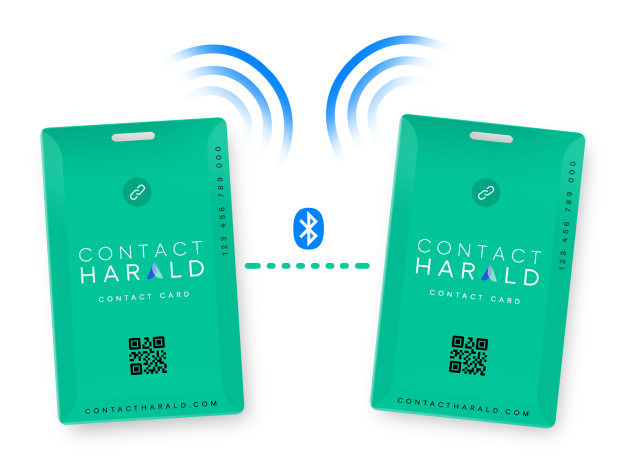
Contact Harald’s key benefit is the inherent speed at which initial alerts can reach only recorded close contacts, facilitating reduced time to contain an outbreak, implement essential testing and advise self-isolation.
Workplaces using Contact Harald become the 'first line of defence' and could readily provide digital primary contact tracing data sets (within the context of their workplace) to assist DHHS commence contact tracing earlier than when COVIDSafe details can be accessed. By using Contact Harald’s faster tech-based contact tracing, workplace outbreaks can be contained quickly, close contacts tested and self-isolating awaiting results; resulting in also minimising further transmission in the community.
The proximity detecting technology is contained within a wearable card - just like an employee ID or access card. Contact Harald differs from a mobile app in that it only works when in proximity to cards worn by others. Unlike other contact tracing technologies, Contact Harald doesn’t require a mobile phone to act as the "hardware" to drive the software, doesn’t use GPS and, when used as a compliance tool in businesses, can offer 100 per cent uptake.
Lanyard and clip on versions are available and can be cleaned and sanitised with an alcohol wipe. As the cards use low Bluetooth energy, they also work under personal protective equipment (PPE) and have a long battery life – between six to nine months.
Contact Harald can be up and running within days. The standard system - cards, lanyards/clips, a tablet-based registration platform and operating software - is designed as an “out of the box” solution that can be deployed quickly, and set-up is contactless. The system is self-contained and needs no complicated IT integration, so onboarding of new workplaces is contactless.

In most cases, facilities can have the system up and running within hours of receiving their product. Most stand-alone businesses find the standard system can allow them to quickly comply with the need to have High Risk COVID Safe Plansin place.
Software can be tailored to work seamlessly across multiple facilities. The system requirements remain the same - each staff member/contractor/visitor/resident still need their own card, and each facility will need its own tablet to register details.
System specific requests and operational needs can be accommodated to allow the system to work across multiple workplaces. Customised systems are currently being delivered to workplaces within two to 10 days of orders being received, depending on the scope of customisation required.
For more information, connect with Contact Harald today.
Phone: 1800 290 566
Email: business@contactharald.com
Website: www.contactharald.com/ready


